

Unknown Creditor Challenge Insurance: A Bespoke Solution for a Complex Estate Administration Matter

Lenders
D-Risk
Shawbrook Bank accelerates its focus on climate risk
CLSQ and D-Risk supported Shawbrook Bank’s long-term strategy for embedding climate risk into its lending and risk framework. The partnership helped strengthen climate management information and support quantitative scenario assessment and TCFD reporting.


Requirements
Shawbrook wanted to strengthen its approach to climate risk in line with the PRA’s SS3/19 supervisory statement on managing the financial risks from climate change, including both physical and transition risks. The bank needed support in evaluating climate-related threats at individual property level and building a more robust framework for risk analysis and customer engagement.
Our Solution
CLSQ and D-Risk combined their expertise to help Shawbrook assess the threat of climate-related events across property-level exposures. As part of this work, the bank used FloodBI™, an innovative product designed to evaluate the varying vulnerability of individual UK businesses to flooding. This supported Shawbrook’s broader climate risk analysis and helped align its approach with regulatory expectations and counterparty engagement requirements.


The Results
The work represented a significant step forward in embedding climate risk into Shawbrook’s risk management framework. By strengthening the bank’s climate management information at property level, CLSQ and D-Risk helped provide a clearer, more detailed view of exposure across the portfolio and the potential impact of climate-related events on individual assets.
This gave Shawbrook greater confidence in its quantitative assessment of climate-related scenarios, supporting a more informed and structured approach to risk analysis. The insights generated through the project were also used within the bank’s latest Task Force on Climate-related Financial Disclosures (TCFD) reporting, helping to enhance the quality of its internal analysis and external disclosures.
Beyond reporting, the project helped Shawbrook move from building its understanding of climate risk to taking more practical steps towards embedding it within long-term decision-making. This included creating a stronger foundation for future lending and risk strategies, improving engagement around climate-related exposures, and supporting the bank’s wider commitment to helping customers transition to a low-carbon economy.
Data intelligence has a vital role to play in helping identify, manage, and mitigate the risks associated with climate change. This technology supports our strategy to evolve from understanding climate risk to actively supporting our customers in the transition to Net Zero as an integral part of the group’s purpose.
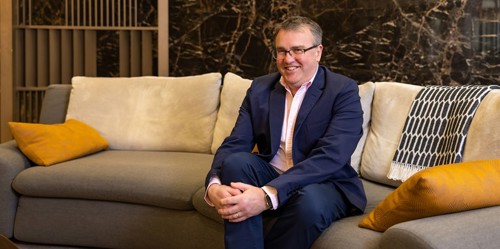
Hugh Fitzpatrick
Chief Risk Officer
at
Shawbrook
CLSQ's & D-Risks innovative approach and commitment to delivering cutting-edge data-driven solutions has significantly improved our climate management information at Shawbrook Bank, enabling us to complete our quantitative assessment of climate related scenarios, which has been used for our latest Task Force on Climate-related Financial Disclosures (TCFD) Report. We look forward to using these insights to support our customers in the transition to a low carbon economy

Paul Allton
Chief Prudential Risk Officer
at
Shawbrook Bank
Regulatory alignment
Supports Shawbrook’s response to PRA SS3/19
Property-level analysis
Climate risk assessment at individual asset level
Improved reporting
Used to support quantitative scenario work and TCFD reporting
Get in touch
More Case Studies